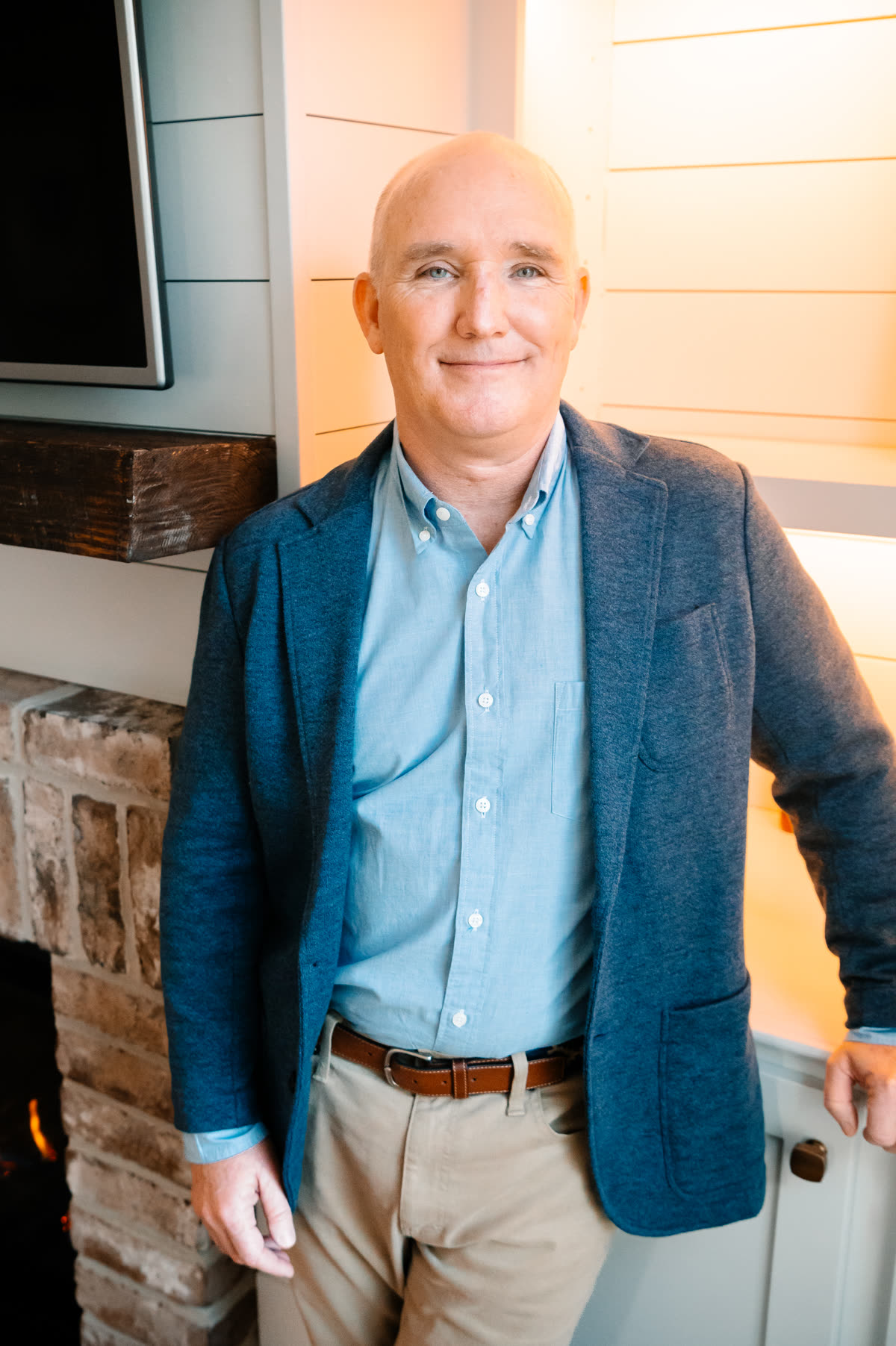
I built Flashkut because I needed it. After seventeen years in real estate and eight years making YouTube videos on my own, I had figured out what worked — and I had also figured out that doing what worked was a full-time job on top of selling houses. The coaches sold the vision. The firms charged $6,000 a month and still couldn't match my brand. Nobody had built the layer between strategy and shipping. So I built it. First for me. Now for the agents ready to take it into their own hands.
This is the long version of that answer.
The seventeen years before video
I cold-called for seventeen years.
That sentence sounds simple. It wasn't. Seventeen years of waking up earlier than everyone else, dialing strangers who didn't want to hear from me, working through rejection at a rate that would have ended most careers. The math of cold-calling is brutal, and it doesn't compound. You make the calls, you maybe get a contact, you maybe close a deal. Tomorrow the counter resets to zero. The list never finishes. The phone never stops needing to be picked up.
It worked. I built a real business that way. But every real estate agent who's spent ten years on the phone knows the same thing — at some point you start asking whether there's a version of this where the leads come to you, instead of you chasing them every morning.
For me, that question started in 2018.
The eight years on YouTube, alone
I got into video the way most real estate agents do. I read a couple of articles, watched a few coaches on YouTube, bought a camera that was probably too nice, and started filming.
What I didn't know yet was that I was about to spend eight years figuring out, by trial and error, what every video coach was already charging $12,000 to teach — and getting most of it wrong anyway.
My price range doubled in the first year of being on video. Sellers I'd never met started calling me. The trade-off I'd assumed — fewer calls per day, but better calls — turned out to be true. Inbound was warmer than outbound by an order of magnitude. The asymmetry was real.
But the production was crushing me.
It took me roughly eight years to understand that the title, the thumbnail, and the first 15 seconds of a video were 70% of whether anyone watched it. The actual content of the video — the part I'd been agonizing over — was the smaller half of the math. I'd been spending six hours editing footage that nobody was clicking on because the thumbnail was wrong. YouTube's own creator guidance says the same thing: thumbnails and titles do the heavy lifting before the video ever plays.
That's the part the coaches don't tell you. They sell the vision of being on camera. They don't sell the part where you realize, three years in, that you've been optimizing the wrong thing.
The $6,000-a-month firm
So I did what most real estate agents do at that point. I hired help.
I found a production firm and paid them $6,000 a month. They produced four longform videos per month and a dozen short-form cutdowns. On paper, that's exactly what I needed. In practice, I spent the next four months doing two jobs:
- Being a real estate agent.
- Going back and forth with the firm's editors about why this thumbnail didn't match my brand, why this hook didn't sound like me, why this cutdown wasn't formatted right for Instagram, why this title used a word I don't say.
The firm wasn't bad. They were doing what production firms do. The problem was that they were optimizing for their idea of a real estate video, and I was a specific real estate agent with a specific brand. The off-brand edits piled up. The Slack messages multiplied. I was paying $6,000 a month and still doing four hours of "creative direction" per week.
And distribution — getting the longform distributed out to YouTube, Facebook, Instagram, LinkedIn, TikTok in the right formats, on schedule — was a separate job entirely. They didn't cover it. Nobody covered it well.
I had paid to remove a problem and ended up with a different one.
The morning I decided to fix it
The morning I decided to build something was in fall 2024. I'd just finished a forty-five-minute back-and-forth with an editor about a thumbnail. The thumbnail. For one video. While my phone had three voicemails from actual sellers I needed to call back.
I sat at my kitchen table and wrote down what I actually wanted. Not what the coaches were selling. Not what the firm was producing. What I wanted my morning to look like.
The list was short:
- One longform video, out the door, every morning, with my coffee.
- A month of topics already planned. Probate. Estate sales. Charleston neighborhoods. I wanted to walk into the morning knowing exactly what I was filming.
- Title, thumbnail, hook — done before I sat down to record, in my brand, in my voice.
- One take on the phone. Maybe ten minutes of actual recording.
- The longform produced — edited, color-graded, branded — without me touching it.
- Distributed as ten to twenty short-form pieces, each formatted per platform, captioned, scheduled.
- All of it out the door before my first listing appointment.
That was the job description. I just needed to build the worker.
Why no one had built it
I spent a few weeks looking at what already existed. There were three categories.
- Video coaches. Sold the vision. Sold the strategy. Could teach you how to think about your channel. Did not produce anything for you. $5,000 to $18,000 a year.
- Production firms. Produced things. Could not produce them in your voice without months of back-and-forth. Did not handle distribution. $4,000 to $8,000 a month.
- AI tools. Cheap, generic. Could write a script in 30 seconds, but the script sounded like every other AI-written real estate script — same hooks, same structure, same words. No brand. No retention.
The missing layer was obvious once you saw it. Strategy was sold. Editing was sold. Distribution was barely sold at all. The execution layer that turned strategy into shipped work — in your specific brand, on your specific cadence — was the thing nobody had built.
That's the layer Flashkut is.
The first morning I ran on Flashkut
I'll never forget the first morning the system was actually working end-to-end.
I sat down at 8:00 a.m. with coffee. The strategy calendar — already loaded with a month of probate and estate-sale topics — told me which video was up. Titles and thumbnails were generated against my brand profile while I was getting dressed. By 8:15, I'd picked the three variants I'd click on myself.
By 8:45, I had the hook scripted and the talking points outlined. By 9:15, I'd recorded the video on my phone, one take, conversational, in the room next to my kitchen.
By 10:30, the longform was edited — my colors, my pacing, my thumbnail system. By 11:00, it had been distributed into seventeen short-form pieces, each formatted for its native platform, captioned, scheduled to post over the next forty-eight hours.
I was done by 11:00 a.m. My first listing appointment was at 1:00 p.m.
That was the moment I knew it was real. Not because of the technology. Because of the rhythm. Because for the first time in eight years of making videos, the work had a shape — a beginning, a middle, and an end before lunch. And then it shipped.
What it looks like in practice
The proof isn't theoretical. I run my YouTube channel — Nat Wallen - Charleston Real Estate Expert — on Flashkut every weekday. It's the channel I've been growing for years, but now it ships from a system instead of a side-of-the-desk push.
The content is the same kind of work I'd be doing anyway — local market reports, neighborhood breakdowns, the questions sellers actually ask me at the kitchen table. Nothing performative. Nothing trying to be TikTok. Just the Charleston real estate brain I've been building for seventeen years, now shipped in a format people search for.
I'm not viral. I'm not pretending to be. But I've had several "come list me" calls — sellers who watched a specific video, recognized me as the real estate agent who already understood their situation, and picked up the phone before I knew they existed.
That's the unit economics that compounds. One video. One seller. One direct call. Multiplied across a video library that compounds in YouTube search over years.
The channel is the proof. Flashkut is the system. The system is the part nobody built.
How the pricing is built
I want to be honest about this part too.
Plans start at $500 a month — 4 longform videos, one a week, plus 15+ distributed pieces every week across YouTube, Instagram, Facebook, LinkedIn, and your Google Business Profile. That's $125 a video. A designer's thumbnail costs more.
Prices will go up. Ours will too, because our costs go up. When we raise them, we raise them for new customers. If you're already on Flashkut, your price stays what it was the day you signed up. That's not a marketing line — it's how the business is built.
Month-to-month across every plan. Cancel anytime. No refund on the month you cancel, but every file you've made with Flashkut walks out the door with you. The channel is registered in your name. The social handles are yours. Flashkut is the engine. The content is yours.
What I want for you
If you've read this far, here's what I want you to take away.
The desire to be on video isn't your problem. You already have that. The reason you've quit before — or are about to quit — isn't motivation. It's that nobody has built the production layer that makes the morning sustainable.
That's what Flashkut is. That's why I built it. And that's why the pricing is fair by design — so the agents who show up early get to keep the price they showed up at.
If your market is open and you want to see how the morning actually works, the qualification call is the next step. 30 minutes. No pitch. We confirm your market is open and decide together if it's a fit.